
Natural stone and terracotta tiles bring a grounded, timeless warmth to any space—but they also require thoughtful care. These materials are highly porous and respond differently to wear, moisture, and cleaning agents.
Whether you’ve chosen travertine for its soft, earthy veining or handmade terracotta for its rustic variation, maintenance is key to preserving their character. This guide covers how to clean, seal, and protect both types for long-lasting beauty.
In this guide: How to clean terracotta and stone tiles • When to reseal terracotta• What products to avoid • When to call in professionals
1. Understand Your Material
Not all tiles are created equal. Terracotta and natural stone ( whether used indoor or outdoor ) are both porous but differ in texture, hardness, and finish.
- Natural stone includes marble, limestone, travertine, granite, and slate—each with unique veining and surface texture.
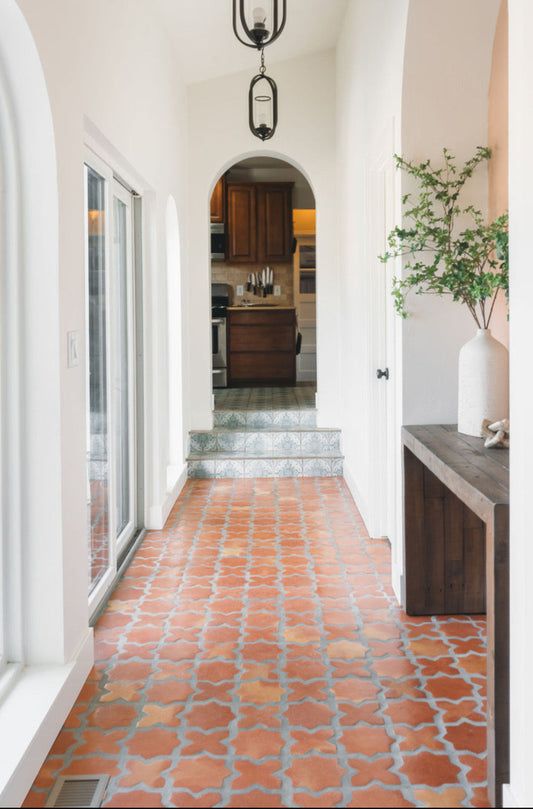
- Terracotta is a low-fired clay tile, often handmade. Saltillo, from northern Mexico, is known for its warm ochre and red tones, surface variation, and soft, rustic texture.
Both tile types are absorbent and benefit from sealing and routine maintenance. Untreated, they can stain, absorb moisture, or wear unevenly.

2. Daily & Weekly Cleaning
Dry-Clean First
- Sweep or vacuum with soft bristles at least once a week.
- Avoid dragging sand, soil, or grit across the floor—these can scratch the surface or wear away sealer.
Wet-Clean with Care
- Mop using warm water mixed with a pH-neutral cleaner or a few drops of gentle dish soap.
- Never saturate terracotta or natural stone during cleaning—use a damp (not wet) microfiber mop to prevent excess moisture from soaking into unsealed areas.
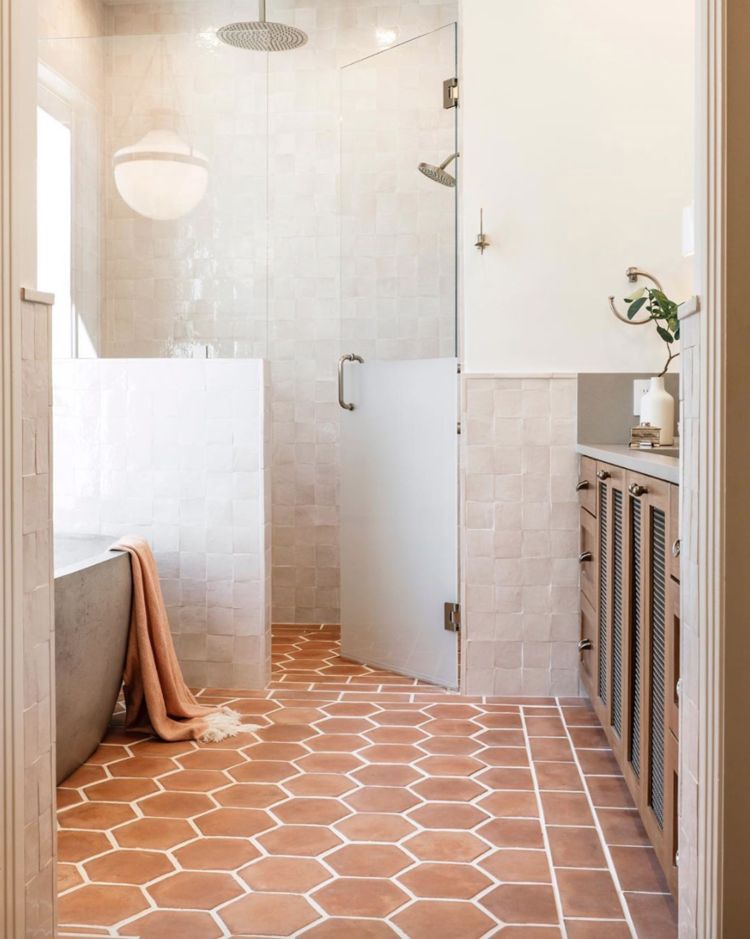
- While both materials are commonly used in wet zones like showers, this is only safe when tiles are properly sealed and maintained. Day-to-day cleaning should still avoid over-wetting to preserve seal integrity and prevent discolouration.
- Rinse with clean water to remove any remaining residue.
Avoid
- Bleach, ammonia, vinegar, and citrus-based cleaners—they can etch or dull the surface.
- Steam mops—heat and moisture can damage porous surfaces and degrade sealers.
3. When and How to Reseal
Both terracotta and stone need regular resealing. Frequency depends on foot traffic, exposure to water, and whether the tile is used indoors or out.
The Water Test
Sprinkle a few drops of water onto the tile:
- If it beads up, your sealer is still active.
- If it darkens or absorbs within 30 seconds, it’s time to reseal.
Resealing Guide
- Handmade terracotta: Reapply penetrating sealer every 2–4 years. For glossy finishes, a topcoat sealer may also be needed.
- Natural stone: Reseal every 1–3 years. For stone in wet zones, reseal annually.

4. Deep Cleaning & Stain Removal
Terracotta
- For surface grime, use a soft brush with a mild soap solution.
- For stubborn stains, apply a paste of baking soda and water. Let sit briefly, then gently scrub and rinse.
- Avoid acids or abrasive scrubbers.
Natural Stone
- Use a poultice (a blend of absorbent powder and cleaner) to draw out deep stains.
- For general grime, stick to stone-safe cleaners or dilute alkaline solutions.
If stains persist or coatings become uneven, consult a restoration specialist before attempting DIY stripping.
5. Sealing: Preserve & Protect
Sealing doesn’t just protect against stains—it enhances colour, reduces wear, and makes cleaning easier.
Types of Sealers
- Penetrating (impregnating) sealers: Absorb into the tile and leave a natural matte finish.
- Surface (topical) sealers: Add a visible sheen and sit on top of the tile—common on Saltillo to enhance colour and gloss.
For most applications:
- Seal before grouting to prevent stains.
- Apply 2–3 coats of penetrating sealer on new installs.
- Allow proper drying time between coats, as per product instructions.

6. Prevention Tips
Protect your tile with a few simple habits:
- Use coir doormats at entrances to trap grit.
- Add felt pads under furniture legs to avoid scratching.
- Wipe up spills promptly—especially oils, wine, and acidic food.
- For outdoor areas, clean and reseal more often due to UV and rain exposure.
7. When to Call a Professional
DIY maintenance has its limits. If you notice any of the following, it’s best to consult a stone or tile restoration expert:
- Efflorescence (white mineral deposits)
- Sealer peeling or flaking
- Deep oil or moisture stains
- Worn, patchy finishes on terracotta
- Heavy buildup or discolouration
Professionals can deep clean, strip old coatings, re-seal, and even refinish surfaces to restore uniformity and sheen.
FAQs
How often should I reseal terracotta and stone tiles?
Terracotta : every 2–4 years.
Natural stone: every 1–3 years, or annually in wet areas.
Can I use vinegar to clean terracotta or stone tiles?
No. Acidic cleaners like vinegar or citrus can damage the surface and strip away sealer.
What happens if I don’t seal my tiles?
Unsealed tiles are vulnerable to stains, discolouration, and water absorption—shortening their lifespan and beauty.
Can I use the same sealer for both stone and terracotta?
No. Always choose a sealer specific to the tile material. Terracotta often requires solvent-based penetrating sealers; stone sealers must be pH-balanced and breathable.
Final Word
Natural stone and terracotta bring character and beauty that only improve with age – but only if they’re well cared for. With regular gentle cleaning, timely sealing, and a few preventative habits, you’ll preserve their tone, texture, and tactile appeal for decades to come.